

What 450 of the World's Top CX Leaders Uncovered in Lisbon and What It Means for the C-Suite in 2026.
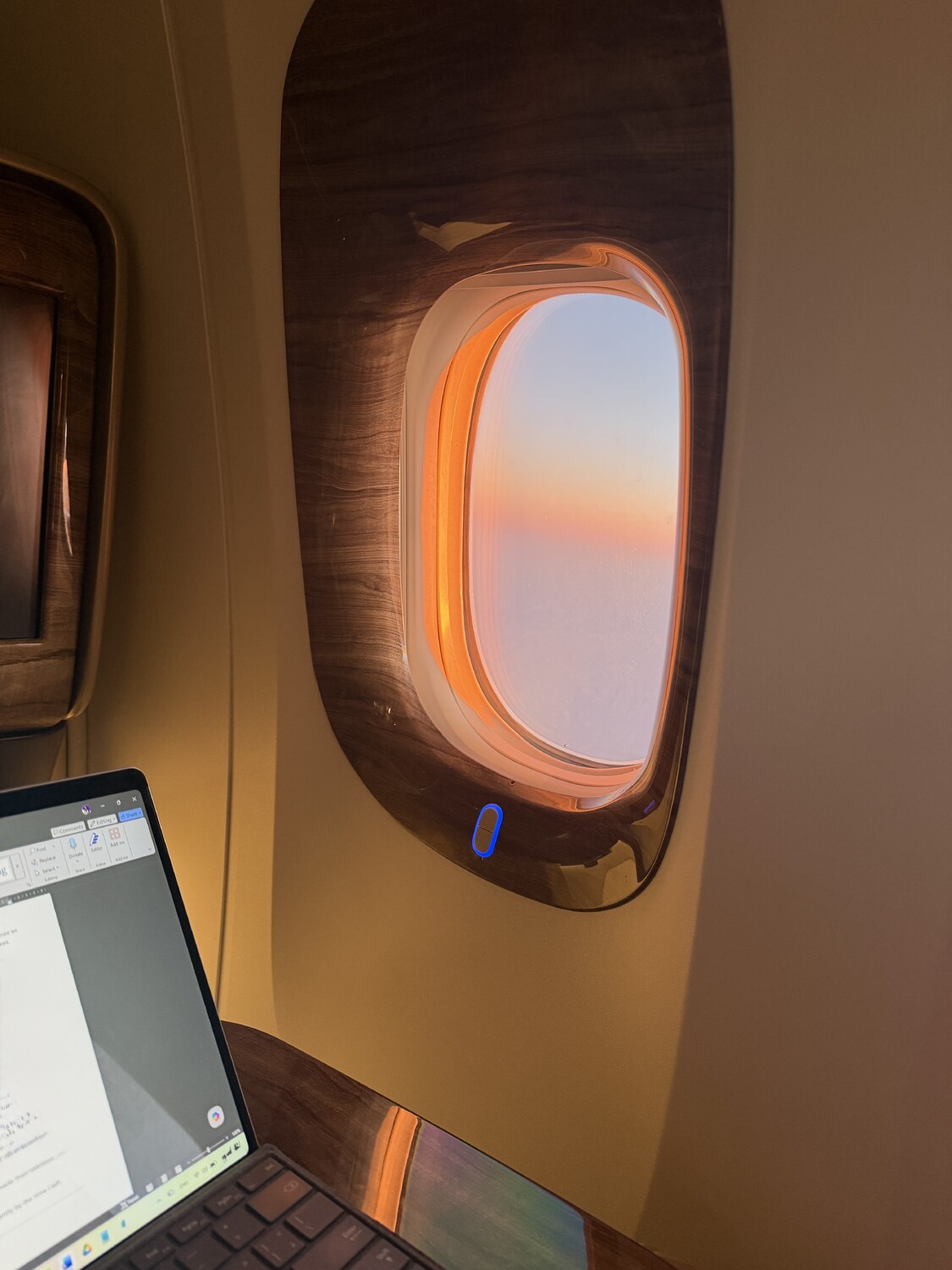
Written at 40,000 feet. Lisbon to Dubai. Emirates.
Somewhere in your organization right now, a customer is deciding to leave.
There is no complaint filed, no angry email and no phone call that ends badly. They are simply recalculating whether the relationship with your organization is still worth continuing. By the time the lagging data tells your analytics team that something is wrong, the revenue has already vanished.
This is exactly what 450 of the world’s sharpest customer experience leaders spent three days in Lisbon working through. And what came out of it was the kind of honesty this industry rarely allows itself.
I was one of them. After enough years in the industry, you learn which invitations are worth the effort and which ones are just expensive echo chambers. This one wasn’t even a decision.
The Best CX Lesson I Received That Week Happened Before The Summit Even Started
The invitation found me on vacation.
Properly on vacation. No Teams calls, no strategy decks and no one asking me to fix their customer journey before breakfast. The kind of break where your out-of-office is on and you actually mean it. But then the invitation arrived. I read it once. Twice. Closed it. Opened it again.
There was just one operational problem. I had no suit, no plan and a Forbes CX Summit in forty-eight hours. And a coastline that had absolutely no interest in helping me solve any of that.
Every shop on that coast spoke exactly two languages: red carpet Cannes or swimwear. Stunning if you were heading to a yacht or a film premiere but slightly less useful when your next stop was a Forbes summit. I walked into shop after shop. Nobody had prepared for this particular request.
And then Armani and Cavalli. Two brands I walked into with a problem and walked out of with a story.
The right size tracked down from another store in another city. Another piece adjusted in a few hours. Delivered to my hotel door five minutes before I needed to leave for the airport. I stood there genuinely moved. Not by the suit. By the people who made it happen.
This was a product gap handled with extraordinary grace. And in CX, those two things require completely different responses. When a customer receives no solution, no referral, no “let me help you find this elsewhere,” that moment becomes a memory. Not of the gap. Of whether the brand cared enough to help anyway.
Armani and Cavalli understood that without needing it written in a manual.
And because the universe wanted to make this trip truly memorable before it even began, I had also just flown my parents in to enjoy Lisbon while I worked. My parents’ reaction to all of this deserves its own article. Some trips you plan carefully. Others just pull you in and you figure it out as you go.
Why Lisbon for the Forbes CX Summit?
I have been to Portugal more times than I can count. And every time, the same thing happens. The people disarm you completely. Warm, direct, honest in a way that feels rare in a world that has learned to perform warmth rather than feel it. The food reminds you that simple done brilliantly is always better than complicated done adequately. And the history a city that launched the entire Age of Exploration, that sent ships into the unknown when the unknown was genuinely terrifying, that built an empire from the edge of a continent sits in the streets without needing your attention. You just feel it.
There is a Portuguese word “saudade” that has no direct translation in any other language. It describes a deep longing for something beautiful that may never return. Lisbon as the frontier of exploration of CX felt like exactly the right place for an uncomfortable conversation about what modern customer experience is losing and what it must protect at all costs.
The event was designed the way good CX is designed: three days, each one doing a different job. June 16 was the C-level leadership hub at Vila Galé Collection Paço dos Arcos, a place that has watched enough history pass through it to make you sit up a little straighter without knowing why. June 17 was the full summit at Nova SBE, one of the world’s leading business schools, which tells you everything about the strategic positioning. June 18 was the roadmap workshop where conclusions became corporate commitments. These people design experiences for a living, so of course they got their own right.
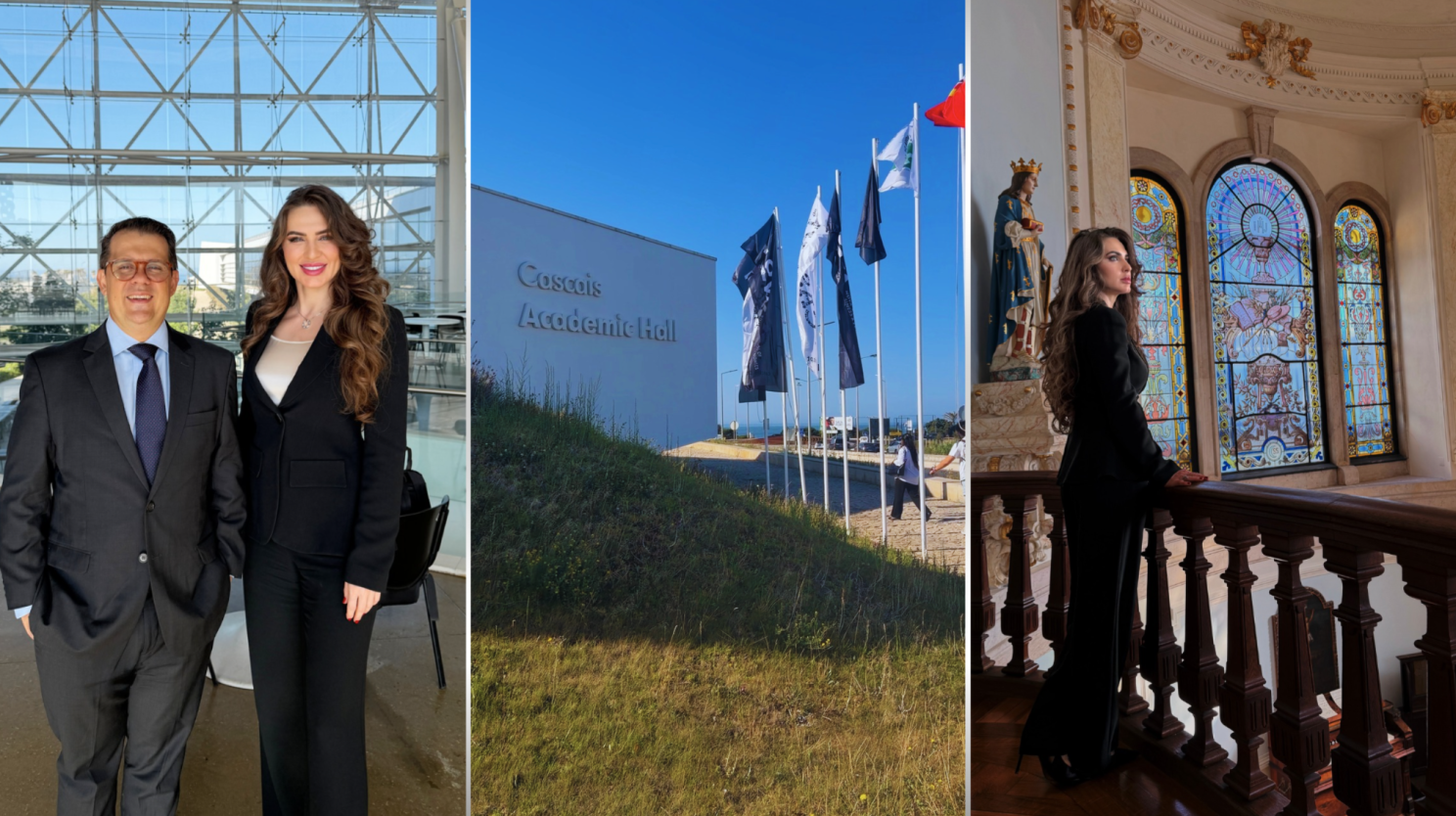
The summit’s framing laid down the core mission clearly: exploring how human leadership and AI work together to build trusted, scalable and meaningful customer experiences. Trust, people and technology. The entire conversation across those three days was about how to simultaneously operationalize all three pillars without sacrificing one for the other to the gods of cost-cutting.
The Physics of Attention: Why Flawless Events Agendas Still Fail?
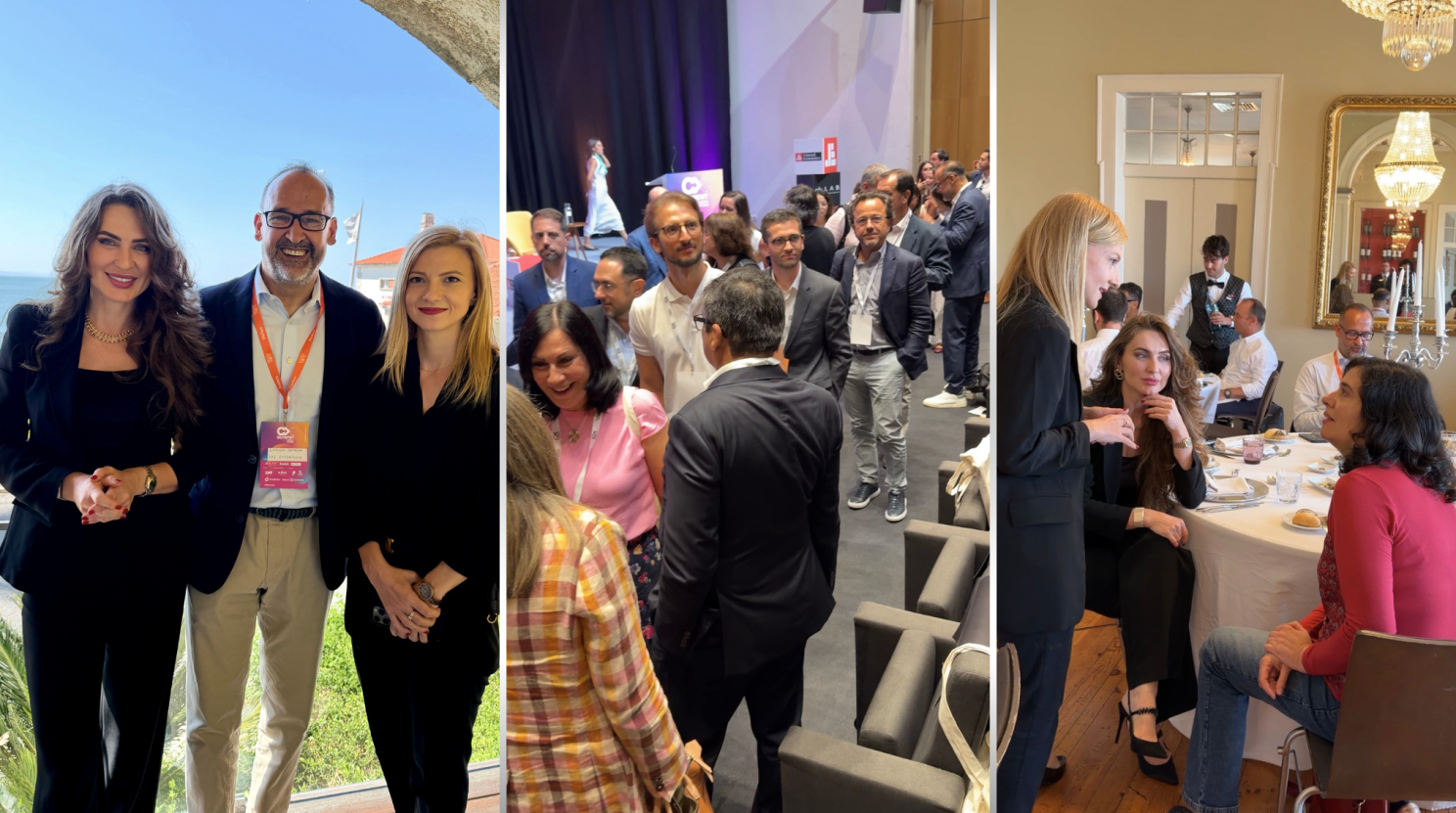
The summit brought together people I had heard of and people I immediately wanted to know. CX leaders from organizations operating across every continent, every sector. Aviation, banking, healthcare, government, hospitality, technology. These were executives who have spent careers inside the specific frustration of knowing exactly what needs to change and pushing the boulder uphill, year by year, to change it.
I go to a lot of events.
And I have become, over the years, an observer of what happens in them. There is a moment, usually mid-afternoon, somewhere between the third speaker and the closing panel, when you can feel the energy in the space shift. Eyes drift to the phones. Postures slump. Attention starts migrating toward the buffet area with the slow inevitability of a tide going out. It is, in its own way, a classic CX failure. The experience stopped delivering value before the agenda ran out of time.
In Lisbon? Not once.
The discussions were uncomfortable in the best possible way. People disagreeing, pushing back, arriving at conclusions that nobody had pre-packaged for the occasion. Every day I came back genuinely exhausted in a way that only happens when your thinking has been fully occupied for hours.
And then there was the CX assessment. Personal questions, not about strategy or frameworks or organizational models, but about you as a CX leader: What kind of CX leader you actually are beneath the professional jargon you’ve spent decades perfecting. Being handed a mirror in a space full of people who advise the world's largest organizations on customer experience. That was not a moment anyone had prepared for. What it revealed was both more specific and more uncomfortable than anything on the agenda.
That level of raw honesty rarely makes it into a corporate program, which is probably why this summit consistently scores an unprecedented Net Promoter Score of 92. For anyone in our industry who has spent years arguing about what NPS actually measures, there is something quietly satisfying about that number belonging to the people who built the event.
The 2026 Paradox: The Financial Black Hole of "More Tech, Less Feeling"
Here is the uncomfortable truth that brought us all to Portugal: customer experience budgets have never been larger and the technology has never been more sophisticated. The strategies sitting inside our leadership teams, the roadmaps, measurement frameworks and cross-functional alignments are precisely articulated. On paper, many of the organizations represented were doing everything right.
And yet,
according to global market research presented for 2026, 54% of customers feel emotionally disconnected from the brands they currently use. Let that sink in. These aren't lost leads or former customers; these are active, paying clients. People who are actively choosing to stay, swipe their cards and show up, yet feel absolutely nothing resembling a human connection inside the transaction.
More investment, less feeling. That is the gap nobody in the industry wants to say out loud and it is exactly what everyone in Lisbon already knew.
It gets more complicated in a world where AI. When any vendor can generate a perfectly polished proposal, tick every box, mirror every framework and speak every industry language fluently, how do you know who actually knows what they are doing? Every vendor looks qualified. Every pitch reads like expertise. The old signals no longer work.
Which means trust, not technology, budget or strategy, has become the scarcest resource in customer experience. True credibility belongs to those who have genuinely earned their conclusions, who have real dirt under their fingernails and actual experience behind the polished words. The organizations that win in 2026 are not the ones with the most expensive tools; they are the ones that have built the internal credibility to be believed when they say something needs to change.
Navigating the Six Blind Spots: Tracking the "Quiet Exit of Your Customer"
Most organizations measure two baseline metrics: customer satisfaction surveys and support tickets. Author Dennis Wakabayashi opened his session with a point that sounds deceptively simple until you sit with it: customers actually make their retention decisions based on six distinct touchpoints. They look at what surfaces when they organic search before committing. They read what reviews say when no one is listening. They watch what community forums discuss. They analyze what AI-generated comparisons say when they evaluate alternatives.
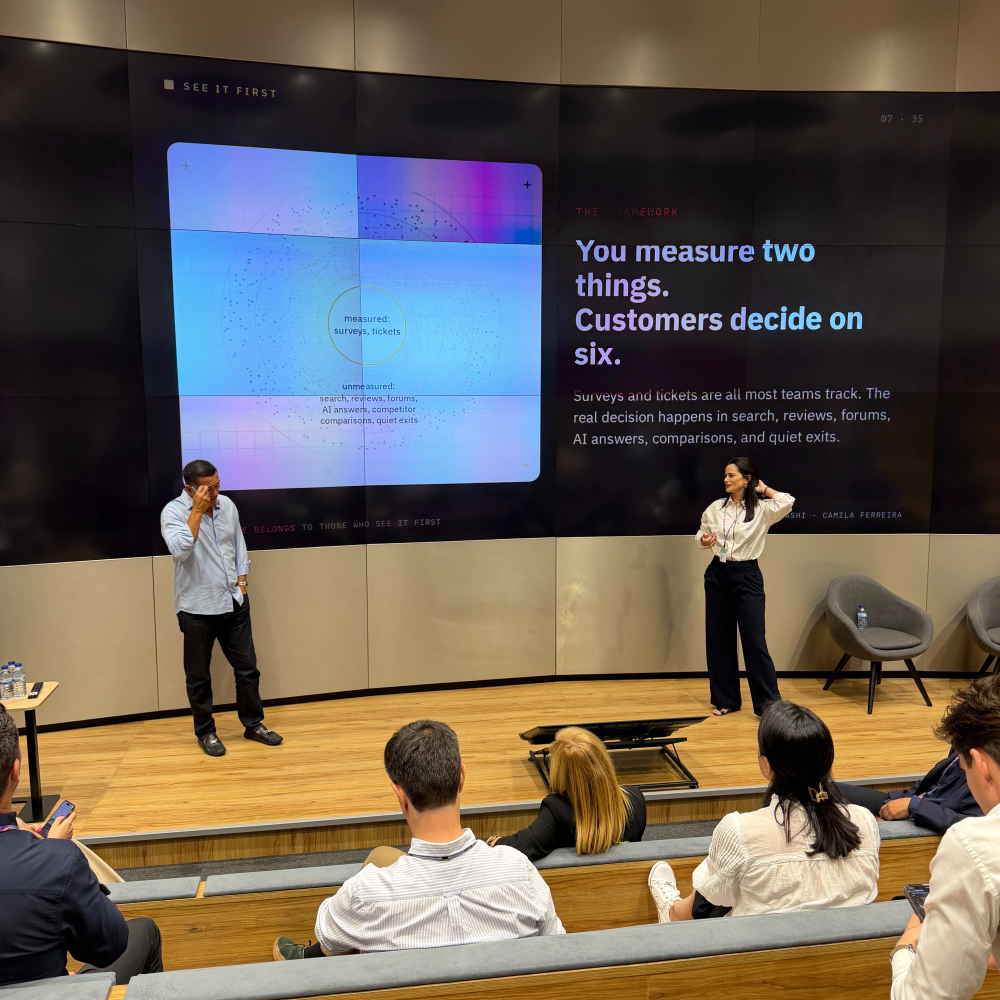
And finally, they weigh the accumulated mass of small, unmeasured moments that produce what researchers now call a quiet exit. No complaint, no drama and no data point that triggers an automated alert. A customer who was there yesterday simply isn't there today and the moment they checked out passed without a single corporate system registering it.
By the time your numbers tell you something is wrong, your customer made their decision in a moment you were not watching. Ask yourself honestly: how many of those six spaces is your organization actually watching?
Camila Ferreira added the layer that made the room go quiet.
Modern enterprises have become extraordinarily good at extracting data from their customers and remarkably reluctant to let any of that insight return in a form the customer can actually feel. We need to stop merely collecting and start giving back: insights, learning and knowledge that make a client feel the relationship is reciprocal rather than extractive.
The AI Pilot Mirage: De-Risking the 6 Points of AI Failure
Then came the AI conversation, the most unvarnished, unguarded debate I have ever heard among senior executives.
Globally, 67% of customers are perfectly comfortable using AI for simple, transactional interactions. But only 18% trust it to handle something that is emotionally complex, sensitive, or high-stakes.
Many leadership teams are aggressively optimizing for the 67% to drive short-term cost reduction, while treating the critical 18% as a future roadmap item. This is a structural error. Organizations optimizing purely for interaction speed and lower cost-per-ticket are gaining exactly what they measure while quietly accumulating a massive trust deficit that will decimate contract renewals before it ever shows up on an operational dashboard.
The executive discussions regarding enterprise AI deployments revealed why so many digital transformations stall. The summit identified six predictive failure points that occur between a successful pilot and a revenue-generating production environment, all of which are visible before go-live:
- Controlled-Environment Bias: Engineering pilots for operational comfort rather than exposing them to peak volumes and high-friction customer scenarios
- Knowledge Base Collapse: Deploying systems that perform flawlessly on highly curated, static content but completely fracture under real-world data complexity
- Deferred System Integration: Postponing deep backend integrations because they are architecturally inconvenient, leaving critical data completely siloed
- Mandated Centralization: Enforcing global use-cases from corporate HQ while completely ignoring unique regional customer dynamics and market nuances
- Commercial Momentum vs. Compliance: Delaying vital legal, risk and regulatory compliance reviews because neither side wants to slow down project timelines
- Unclaimed Operational Ownership: Failing to rigorously test and map the organizational handover from implementation teams to daily business operators
Every single one of these is fixable before launch; none of them are fixable after. The pilot is not a proof of concept to validate the technology; the pilot is a rigorous risk management exercise to protect the brand. We need to start treating it accordingly.
The Public Infrastructure Benchmark: Why Your Toughest Competitor Isn't in Your Industry
Underneath all the technology and frameworks, Ladislau Batalha dropped the line on day two that landed the way only the simplest truths do:
"Wherever you are in the world, you want to be heard as a client."
The global research confirmed it across every single market. The number one negative customer sentiment worldwide across every industry, continent and enterprise size was not about price, speed or product failure. It was simply this: I didn't feel heard.
European customers described legacy systems that kept repeating themselves while nobody read what they had actually written. Latin American customers who had been loyal for a decade were treated, in a high-stakes moment, like complete strangers.
For enterprises operating or expanding globally, the benchmark for excellence has radically shifted, particularly in the MENA region. In the UAE and Saudi Arabia, commercial brands are no longer competing against their direct industry peers. They are competing against hyper-optimized public infrastructure.
When citizens experience an 82% satisfaction rate with digital government, when 78% of consumers expect a resolution within a single hour and when 64% report a seamless AI experience through government channels, the game has changed. If your commercial application, onboarding process, or resolution speed is more complex than a government portal, your customer has already completed their mental exit.
Customers do not compartmentalize expectations by sector; convenience experienced in one domain instantly becomes the mandatory standard everywhere else. Furthermore, 67% of MENA customers will switch brands after a single poor experience. Not two, not three, one. The rest of the world is catching up to this reality much faster than most executive boards realize.
The Uncompromising Mandate: Reclaiming the Instinct of Truly Being Heard
On my last evening, I took a long walk through the streets of Lisbon before heading back to the hotel. The city was doing what it does best, the amber light catching the old stone streets, the particular ease of a place that stopped needing to prove itself to the world a long time ago.
I thought back to “saudade” that unique Portuguese longing for something beautiful that may never return. And I wondered if that is what customer experience is turning into for most consumers: a nostalgic memory of how it used to feel to be genuinely served, before the dashboards replaced the human instinct, before the automation replaced the attention and before the obsession with efficiency completely replaced care.
“Wherever you are in the world, you want to be heard as a client”. They don't want to be superficially impressed. They don't want to be efficiently processed. And they certainly do not want to be sent an automated satisfaction survey four minutes after an unresolved interaction closes. They want execution. They want resolution. They want to be heard.
It is the most fundamentally human requirement and yet it is the exact thing the most sophisticated organizations in the world, with the most advanced technology in human history, are still failing to reliably deliver.
I am finishing this piece at 40,000 feet on the flight back to Dubai. As our aircraft leveled out over the Gulf, powered by seamless Starlink connectivity, a recent, uncompromising leadership choice by Emirates Airline to eliminate a broken customer touchpoint, the core takeaway from Lisbon crystallized. Emirates decided that a fractured, slow inflight internet experience was no longer acceptable for their executive clients and they completely rebuilt the infrastructure. That isn't a technology story; that is an unyielding leadership decision and it is exactly what we spent three days in Lisbon talking about.
Somewhere in your organization right now, a high-value customer is recalculating if they should stay or leave.
In 2026, the competitive divide is no longer between enterprises that invest in customer experience and those that do not. The divide is between leaders who understand exactly what that investment was intended to buy and those who are still waiting for lagging data to tell them they've been disrupted.
A Diagnostic for Your Next Boardroom Session
Before you approve your next technology capital expenditure, put these three core questions to your leadership team:
- The Blind Spot: Are we measuring the four hidden touchpoints (forums, organic search trends, AI comparison engines and unvoiced churn behaviors) where our customers are actually making their cancellation decisions?
- The Friction Test: Are our current AI and automation pilots being tested against real-world human frustration and peak volume, or are we engineering them purely for pilot-stage comfort?
- The Reciprocity Index: What percentage of our customer data collection is being returned to the client in a way that provides them genuine value, rather than just extracting insights for our own dashboards?